
 YouHired
Software Engineer Resume Example: The Ultimate 2026 Guide
YouHired Team
Career & Product Experts
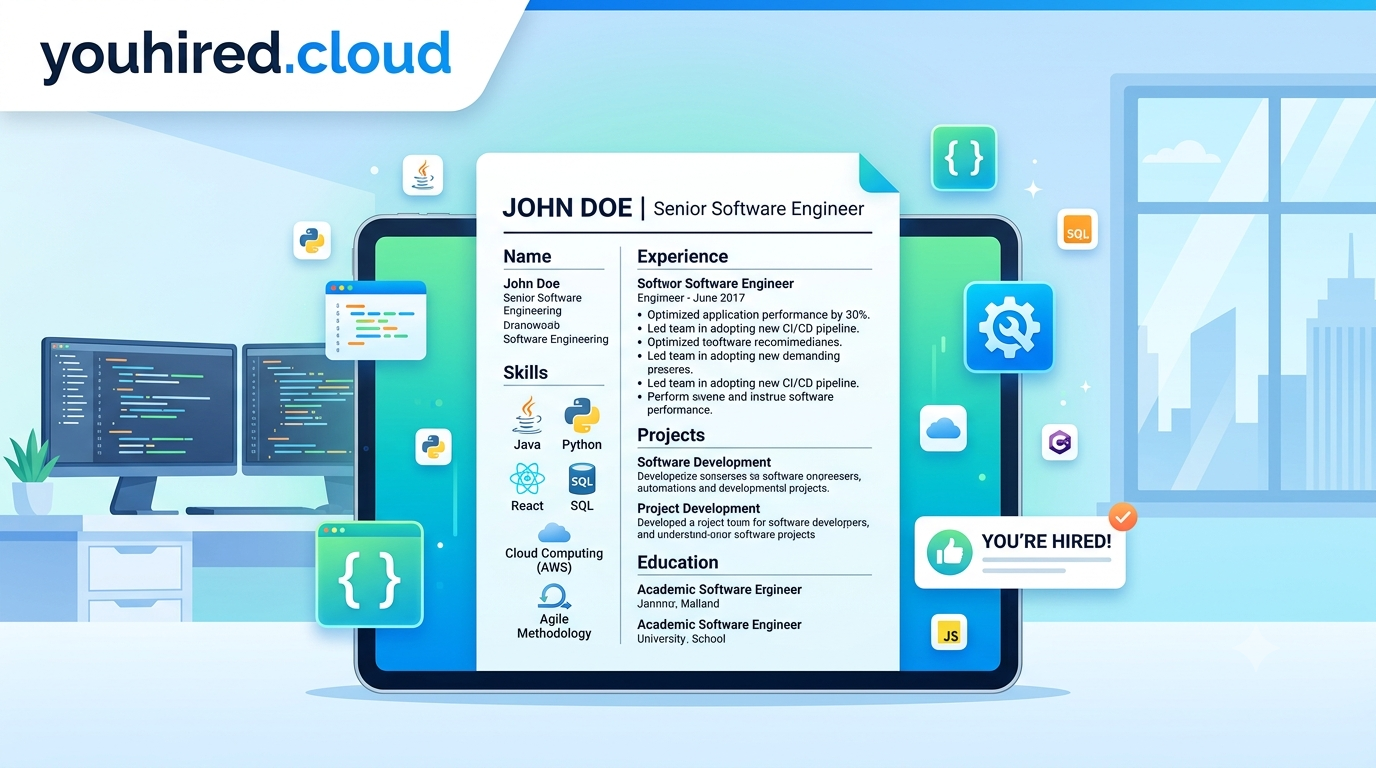
Software Engineer Resume Example: The Ultimate 2024 Guide
Landing a job as a software engineer requires more than just coding skills; it requires the ability to sell those skills effectively. Your resume is often the first interaction a recruiter or hiring manager has with you. In the competitive tech industry, you have approximately 6 to 7 seconds to make an impression.
Whether you are a fresh graduate, a self-taught developer, or a senior engineer looking for a change, this guide provides a comprehensive software engineer resume example and actionable tips to help you pass the Applicant Tracking Systems (ATS) and secure that interview.
Anatomy of a Perfect Tech Resume
Before diving into the example, let's break down the essential sections. A standard software engineer resume should be 1 to 2 pages maximum. It needs to be clean, scannable, and focused on impact rather than just duties.
- Header: Contact information and links to portfolios/GitHub.
- Professional Summary: A brief 2-3 sentence elevator pitch.
- Technical Skills: A categorized list of your tech stack.
- Professional Experience: Your work history with quantifiable achievements.
- Projects: Side projects or open-source contributions (crucial for juniors).
- Education: Degree, bootcamp, or certifications.
Software Engineer Resume Example (Text Version)
Below is a template you can copy and modify. Pay attention to how responsibilities are framed as accomplishments using action verbs.
Key Strategies for Optimizing Your Resume
>Having a good template isn't enough. Here is how you ensure your resume stands out from the stack.
1. Beat the Applicant Tracking System (ATS)
Most large companies use ATS software to filter resumes before a human sees them. To pass the filter:
- Use standard headings: Stick to "Experience," "Skills," and "Education." Avoid creative titles like "My Journey" or "What I Know."
- Keyword matching: Carefully read the job description. If they ask for "Java Spring Boot," ensure that exact phrase appears in your skills or experience section.
- Simple formatting: Avoid tables, columns, or graphics. Standard bullet points are best.
2. Quantify Your Achievements
Don't just list what you did; explain the impact of what you did.
- Weak: "Worked on backend API development."
- Strong: "Developed RESTful APIs handling 50k requests per day with 99.9% uptime."
Use numbers whenever possible. Did you improve speed? How much? Did you save money? How much? Numbers catch the recruiter's eye.
3. Focus on Relevant Projects
If you are a junior engineer or switching careers, your Projects section is as important as your work experience. Link to live demos and GitHub repositories.
Make sure your GitHub is active. Don't just push code once a year. Contribute to open source or document your side projects clearly.
4. Keep Technical Skills Organized
A long laundry list of 50 technologies is hard to read. Group them by category (e.g., Languages, Databases, Cloud Providers). This helps the recruiter quickly scan for the specific stack they need.
Common Mistakes to Avoid
- Typos: Proofread twice. A typo in code is a bug; a typo in a resume shows a lack of attention to detail.
- Objectives: The "Objective" statement is outdated. Use a "Summary" instead.
- Personal Photos: In the US and UK, do not include a photo on your resume unless specifically asked (e.g., for acting or modeling roles).
- Old Technologies: If you list outdated skills prominently (like jQuery 10 years ago without recent context), you may appear outdated. Focus on modern stacks relevant to the role.
Conclusion
Your resume is a dynamic document. It should evolve as you gain more experience and skills. Use the software engineer resume example above as a foundation, but customize it for every application. Tailoring your resume to the specific job description is the single most effective way to increase your interview rate. Good luck!